OpenHuman vs Hermes AI: Which Free Desktop Agent Wins in 2026?
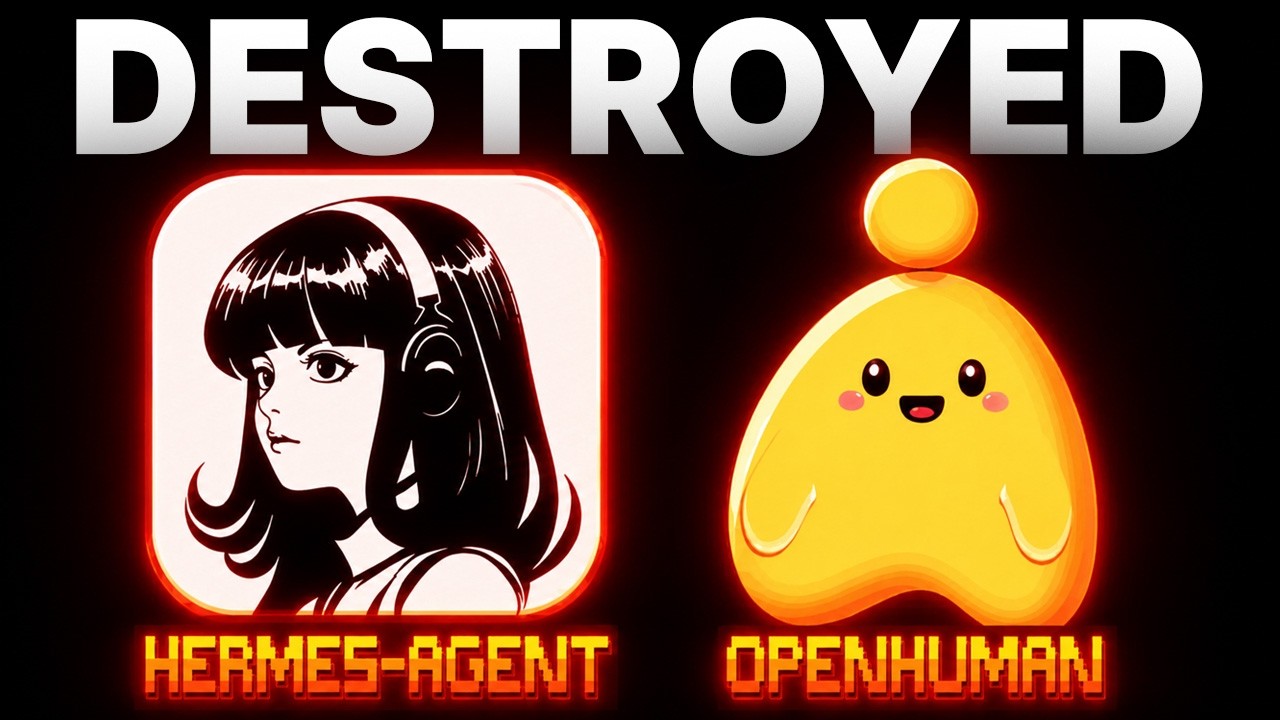
Two free AI agents — OpenHuman by Tiny Humans and Hermes by Nous Research — both run locally, both promise to remember you and work for you. Julian Goldie runs a head-to-head comparison across setup, data safety, and long-term usefulness to give a definitive verdict on which one to pick today.
"OpenHuman VS Hermes AI: Who Wins?" by Julian Goldie SEO — Watch on YouTube →
Key Takeaways
- OpenHuman installs like a normal app with no terminal — connects 118+ apps in one click and builds memory from your existing data instantly, but is still in early alpha.
- Hermes is MIT-licensed, battle-tested with over 64,000 GitHub stars, and sparked a migration wave away from OpenClaw as the dominant local agent.
- Hermes supports 200+ LLM models including OpenAI, Anthropic, OpenRouter, and fully local models — far more flexible than OpenHuman's fixed model stack.
- OpenHuman builds instant memory by reading your apps upfront; Hermes builds earned memory by writing skills when it solves hard problems — that skill library compounds over time.
- Hermes connects via Telegram, Discord, Slack, and WhatsApp so you can message your agent from your phone while it runs jobs at home — OpenHuman is desktop-only.
OpenHuman: The Pretty One
OpenHuman is designed for zero-friction onboarding. Download it like a normal app, click to connect Gmail, calendar, Notion, Slack, and 115 more services, and within minutes it has built a contextual memory of your work — no typing required. The desktop mascot can speak, react to what's on your screen, and even join Google Meet calls as a real participant.
The catch: a reviewer gave it 72 out of 100, calling it "compelling but rough." To make the instant-memory magic work, it requests broad ongoing access to email, calendar, chat history, and payment tools simultaneously. The team says everything stays on your machine in a locked vault — and unusually, lets you open the vault to see exactly what the agent knows. Still, the reviewer warned that the install script deserves a careful read before running it on your main computer. It is early alpha.
Hermes: The Workhorse
Hermes, built by Nous Research (the team behind the Hermes model family), takes about 30 minutes to set up but pays that back many times over. When Hermes solves a hard problem, it writes itself a skill — a note about how it solved it — so it never has to figure that out again. The skill library accumulates over months, making the agent progressively faster and more capable at your specific workflows.
The three reasons Goldie picks Hermes: first, model flexibility — swap between OpenAI, Anthropic, OpenRouter, or any local model across 200+ options. Second, it is fully free, MIT licensed, and built by people who train AI models for a living. Third, the compounding skill memory is designed to hold up over years of real use, not just a demo. The 64,000 GitHub stars and the migration wave away from OpenClaw confirm it works in production, not just in a demo video.
Verdict
Hermes wins for most people who want to put an agent to work today. OpenHuman wins on day-one ease — if you want something running in five minutes with zero learning curve, it feels nicer at the start. But one hour of Hermes setup pays back for years; five easy minutes with OpenHuman leaves you on a tool still in alpha. Goldie's recommendation: spend the hour on Hermes now, keep an eye on OpenHuman for when it matures.
Related on OpenClawDatabase
- Hermes Agent Hub — overview, setup guides, and memory deep-dives
- Hermes Setup Guide — step-by-step install and first configuration
- Hermes Memory Guide — how persistent memory and skills work
- Compare agent platforms — Hermes vs OpenClaw vs Claude Cowork
More Hermes news
 Running a Hermes agent in a real business: permissioning, skills and the trust ladder
 Hermes /loop: recurring agent wake-ups with real stop conditions
 Grok Bot setup: give each bot its own email instead of sharing your accounts
 DeepSeek V4 Pro 0813 driving Hermes agent: agentic benchmarks jump, cost stays low
 Nemotron 3.5 Lightning on vLLM: the Mamba flags for a local agent execution model
 Prime Agent vs Hermes: Self-Writing Notebook vs Shared Vault
← Back to News digest · See also: Hermes guide