Published: 2026-06-20
Analysis & perspective
 Harness Arena: blind-judge Claude Code, Codex, Hermes, OpenClaw and OpenCode on the same task and model
 DeepSeek V4.1 Flash vs GPT-6 Astra on real builds: 4–6× cheaper, 3–5× slower
 Freebuff: an ad-funded coding agent with a daily allowance of GLM 5.3 Flash, Luna and DeepSeek
 Pick models with five benchmarks, not one index: Terminal Bench, Apex Agents, Automation Bench, Omniscience, Deep SWE
 A fully local agent with tools, in about 40 lines: Ollama plus Pydantic AI
 Running Nex-N2.5 Mini on two H100s: the SGLang container setup, and an honest benchmark read
Analysis & perspective
Agent Loops Explained: Reason–Act–Observe Cycles Instead of One-Shot Prompting
Chapters / key moments (click to jump — plays here on the page)
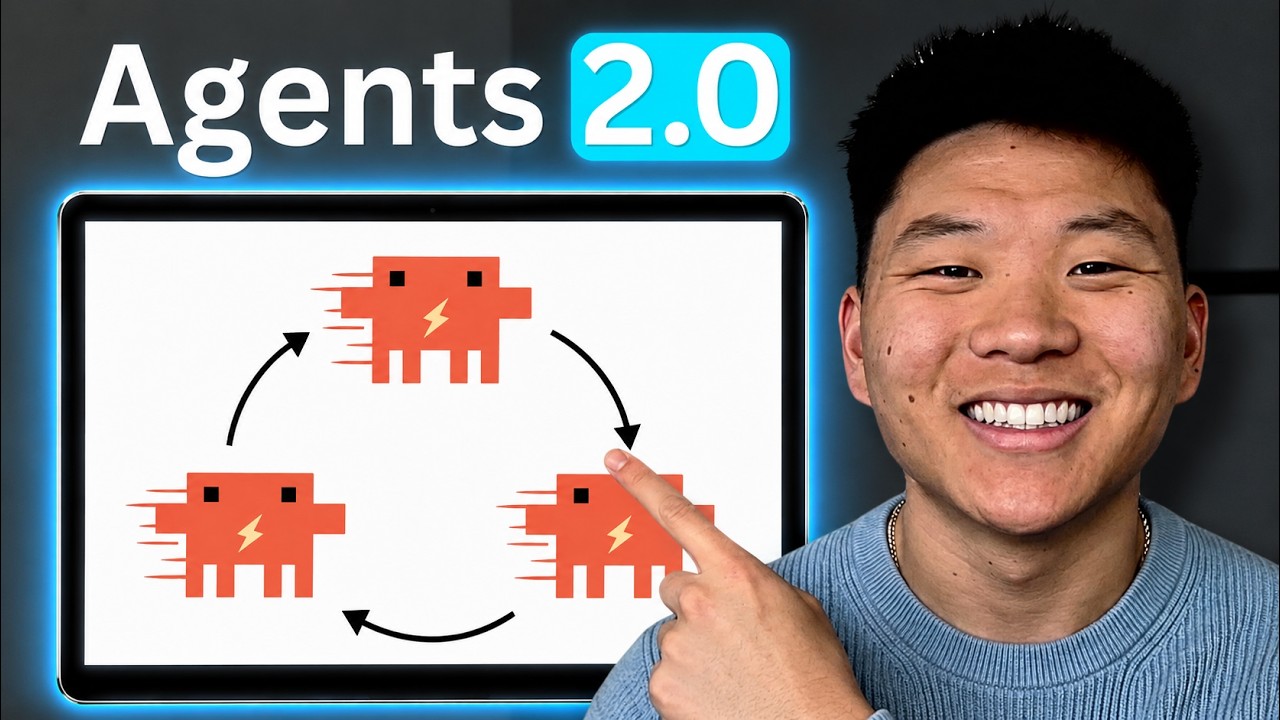
Nate Herk demystifies "loop engineering" — the idea that instead of prompting a coding agent yourself, you design a loop that prompts the agent. A loop is a trigger, an action, and a stop condition, built on two pillars: an objective goal and a verification method. He argues most tasks don’t need elaborate agent swarms — a single reason–act–observe loop with a good "definition of done" does most of the work.
Source video
"Finally. Agent Loops Clearly Explained." by Nate Herk — Watch on YouTube →
Key Takeaways
- A loop is three things — a trigger, an action, and a stop condition — and "loop engineering" means replacing yourself as the one who prompts the agent.
- The two pillars are the goal (as objective as possible) and verification (how the agent checks its own work and knows when to stop).
- Quality climbs with attempts; outsourcing the feedback/iteration loop to the agent gets you to 90%+ far faster than one-shotting.
- Most tasks need only a solo loop — one agent reasoning, acting, observing, repeating — not fleets of agents orchestrating each other 24/7.
- The best stop conditions are measurable ("iterate until X metric equals Y"); vague ones like "until you’re satisfied" can run for 12+ hours with little payoff.
- Examples used Claude Code’s /goal command and Matthew Berman’s open Loop Library (thumbnails scored vs. a rubric, a Three.js plane, an Abbey Road recreation) — each verified visually via screenshots.
Commands & Code Mentioned
/goal # Claude Code slash command used to kick off a self-verifying loopMore OpenClaw & Claude Code news
Harness Arena: blind-judge Claude Code, Codex, Hermes, OpenClaw and OpenCode on the same task and model
DeepSeek V4.1 Flash vs GPT-6 Astra on real builds: 4–6× cheaper, 3–5× slower
Freebuff: an ad-funded coding agent with a daily allowance of GLM 5.3 Flash, Luna and DeepSeek
Pick models with five benchmarks, not one index: Terminal Bench, Apex Agents, Automation Bench, Omniscience, Deep SWE
A fully local agent with tools, in about 40 lines: Ollama plus Pydantic AI
Running Nex-N2.5 Mini on two H100s: the SGLang container setup, and an honest benchmark read