Analysis & perspective
The 1-Minute Test: Is a Task a Chat, Single-Agent, Multi-Agent, or No-AI Job?
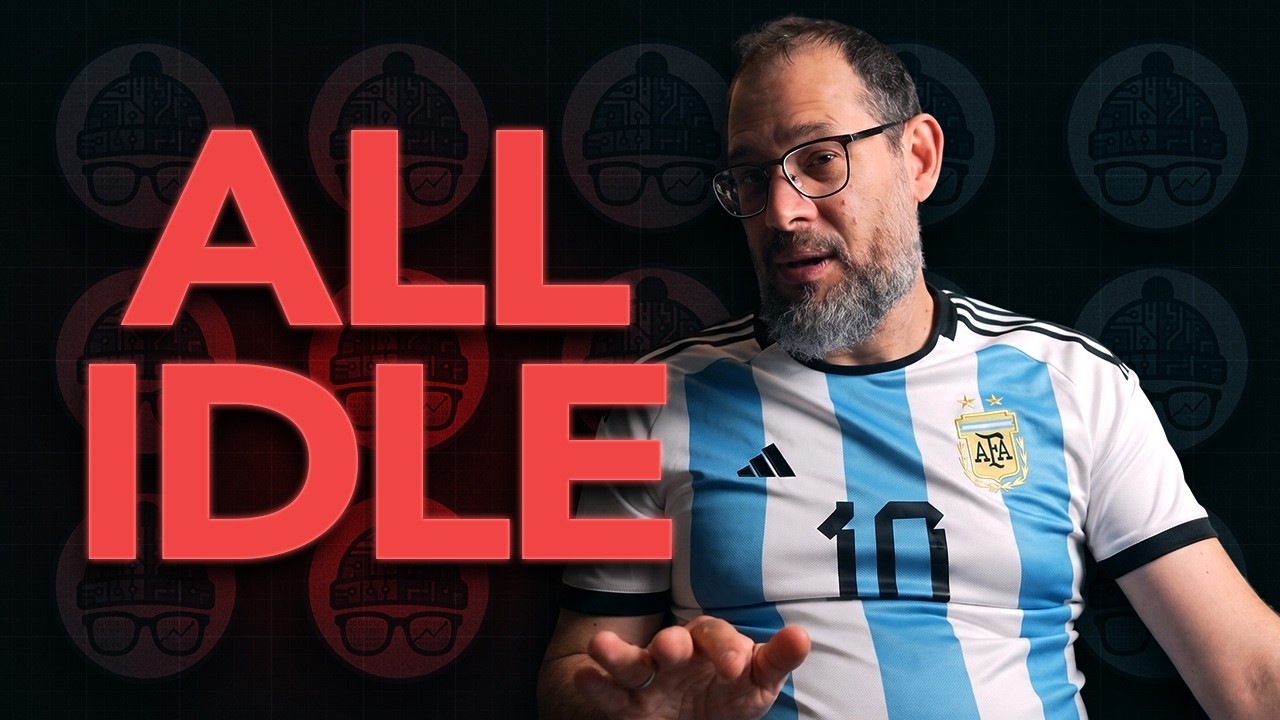
Nate B Jones lays out a four-factor test — size, independence, separation of concerns, and checkability — for deciding whether a task on your desk needs a chat, one agent, a team of agents, or no AI at all. He grounds it in Stanford's repeated-sampling study and Anthropic's multi-agent research, then shows a multi-agent harness ("Ringer") that cut Fable 5 costs roughly 10x by letting Fable plan and cheap worker agents do the work.
"1.6M agents registered for OpenClaw and did NOTHING" by Nate B Jones — Watch on YouTube →
1.6 million agents registered for an agent-driven social network at the peak of OpenClaw — and most never ran a single task. People had the intelligence but no framework for matching their work to the right agent shape. This video is that framework.
The four-factor test
Estimate four things about any task in about a minute. Together they tell you the right tool.
- Size
Is the task bigger than what one agent can hold at full quality? A calendar or a quarter of email usually fits in a context window. A pile of a thousand documents does not.
- Independence
Can the parts be done without knowing what the other parts did? Reading 100 documents splits perfectly — each reader agent works alone. Coding sometimes splits, sometimes doesn't, depending on how you organize files.
- Separation of concerns
Do any parts need to be done by different minds? A critic who didn't write the draft, an auditor who didn't keep the books. Agents give you fresh eyes on demand for the first time — a mind that has never seen the thing.
- Checkability
Is verifying an answer far cheaper than producing one? A test suite, an exit code, a source document you can point at. If checking is almost free, extra attempts pay off. If checking is expensive, multi-agent value tops out fast.
The verdicts
- Small → a chat. Just a back-and-forth.
- Fits one context, self-checks → a single agent with a goal. It works alone and gets the job done (e.g. "find a gym slot around my meetings").
- Too big, or needs separate perspectives → a team of agents. Piles of documents, contract review, project handoffs.
- A pure judgment call → no AI at all. Some hiring, naming, and direction calls still need you.
The research behind it
- Stanford (2024): a cheap coding model given one attempt per bug fixed 15.9%; given 250 attempts it hit 56% — beating the best single-shot frontier model (43%) without changing the model or harness. Improvement followed a smooth scaling law across four orders of magnitude of attempts.
- The catch nobody quotes: at 10,000 attempts, a correct answer existed in the pile >95% of the time — but you can only find it with a mechanical checker. Without external validation, majority voting and reward models stalled around 100 attempts. Every dollar past that line buys answers you can't identify.
- Anthropic: token spend explained ~80% of the difference between a good run and a bad one; a team of agents is how you spend more tokens than a single context can usefully hold. Multi-agent runs can cost 10–30x a single agent.
The "Ringer" harness (cost control)
His multi-agent setup encodes both limits as design:
- Every task gets a spec written once by the strongest model, which then never touches the work again.
- Every finished task gets a mechanical check — the source has to be attached and match the task or the entry is rejected. "The agent's opinion of its own work is not evidence."
- A failed task retries with the failure included; every result feeds a running scorecard you watch stream.
- Letting Fable 5 act as the brains/orchestrator while cheap worker agents burn the execution tokens cut costs ~10x while keeping Fable's judgment. Setup took under an hour.
Where multi-agent pays off
- Piles of documents: contract folders, inbox quarters, a tool-renewal + usage audit across dozens of SaaS subscriptions.
- Project handoffs — briefing a new hire from scattered notes and threads.
- Research archives, financial statements, medical records.
- Privacy note from the video: for sensitive piles, land exports in a folder you control, give agents read-only access to just that folder, and run it on a machine you own so financial/health data doesn't leak.
Key Takeaways
- The scarce new skill isn't prompting — it's knowing when a task needs one agent, many agents, or none.
- More tokens reliably help only when you can mechanically check each attempt; otherwise multi-agent gains stall.
- Two things justify a multi-agent team: a memory constraint (too big for one context) or a separation-of-concerns constraint (parts that must be done by different minds).
- Orchestrate with an expensive model and execute with cheap workers to keep multi-agent runs affordable.
- Run sensitive multi-agent work locally with tightly scoped, read-only folder access.
What you can actually set up from this
Extracted from the video's own transcript — the specifics the original summary left out.
Reproducible steps
- Ask four questions about a task (about a minute)
1. Size: is it bigger than one agent can hold at full quality? A calendar fits; a quarter of email might; a thousand documents does not. 2. Independence: can parts be done without knowing what the others did? Reading a pile of documents splits well; coding splits only if files can be organised into independent parts. 3. Separation of concerns: does any part need a different mind, such as a critic who did not write the draft? 4. Checkability: is checking an answer much cheaper than producing it (a test suite, an exit code, a source document you can point at)?
- Read the verdict
Small: a chat. Fits in one context window: a single agent with a goal. Too big for one agent or needs separate perspectives: a team of agents. Needs judgment, taste or character: do it yourself.
- His three test tasks
Finding a gym slot around meetings: single agent, about five minutes. Reviewing roughly 40 tools' renewal dates, contracts and usage logs into one dashboard with keep, negotiate, cancel or build-your-own recommendations: a multi-agent job. Choosing which candidate to hire: not an AI job; use AI as a sounding board only.
- Multi-agent harness shape he describes
The strongest model writes a spec for each task once, then stays out of the work. Cheap worker agents do the reading and execution. Every finished task gets a mechanical check (source attached and matching the task, otherwise rejected); a model's opinion of its own work does not count. A failed task is retried with the failure included, and results feed a running scorecard. He says this cut Fable 5 cost about 10x and took under an hour to set up.
Gotchas
- Figures cited by the speaker: a 2024 Stanford study took a cheap coding model from 15.9% of bugs fixed on one attempt to 56% with 250 attempts (best single attempt from the best model then: 43%), and at 10,000 attempts over 95% of problems had a correct answer somewhere in the pile. Where there was no automatic checker, gains stalled around 100 attempts.
- He also cites Anthropic's multi-agent research system: token spend explained about 80% of the difference between good and bad runs, and the team beat a single frontier model by 90.2%. Multi-agent runs can cost 10 to 30 times a single-agent run.
- A single agent cannot absorb unlimited spend either: as the context fills, quality drops even with auto-compaction, and newer agentic models may quietly delegate on large tasks.
- For sensitive material (medical records, bank statements) he suggests exports in a folder you control, agents that only read that folder, and a machine you own, such as a Mac mini.
- This is an analysis video; the skill he offers is not shown or described in the transcript, and the transcript is cut off before the end.
More OpenClaw & Claude Code news
 Hyperframes Studio: draw on a frame, let your coding agent fix the video, and what it needs to run
 Google's Android skills for coding agents: the install commands, writing your own SKILL.md, and which new claims we could not confirm
 GitHub Copilot CLI agents: build one with /agent, share it through a plugin marketplace, then run it headless in CI
 Designing a CLI for agents, not humans: JSON in and out, one pattern, a skill that ships with it, and Airbyte's MCP lessons
 Anthropic cut 80% of Claude Code's system prompt: how to audit your own skills and CLAUDE.md with /doctor
 Why Reducto deleted its one-tool-per-endpoint MCP server and rebuilt it with fewer, workflow-shaped tools