Summary
Vercel's fx: a 6 MB Unix-style coding agent, and how its author uses it
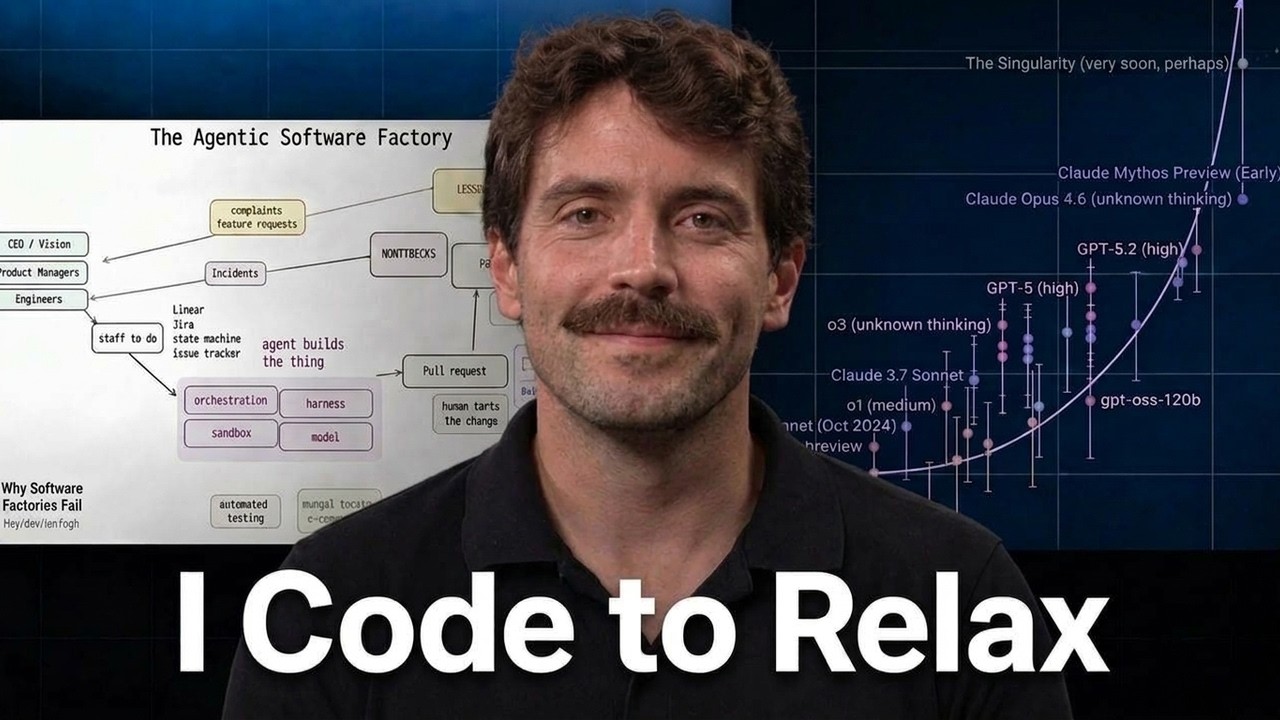
In an interview, Vercel's CEO shows how he works with fx, Vercel Labs' tiny native coding CLI: a one-letter alias that opens a research folder with an AGENTS.md convention, a project-scaffolding alias, agent 'inquiries' that try to break new infrastructure, and an embeddable harness with the model as brain and a sandbox as hands. This summary covers the first 40 minutes of a longer interview.
"Vercel CEO reveals his Agentic Engineering Workflow" by David Ondrej — Watch on YouTube →
The tool: fx
The captions render it 'FX' and 'effects'; it is vercel-labs/fx, described on its repository as a Unix-like coding agent. He says it is deliberately small (6 MB downloaded, 11 MB on disk in his build) and starts as fast as a shell, so opening a new terminal tab can boot straight into it. It ships as both a CLI and a library you can embed in other programs, and the design goal is a program that stays 'fairly immutable' over time instead of accumulating interface. Treat its status as early: third-party listings call it experimental, which this video does not contradict.
His working setup
- A research folder with an AGENTS.md. One folder holds an AGENTS.md that tells the agent what to do with a question: read the instructions, answer, then dump the research into that folder. He says it replaced web search for him.
- One-letter aliases.
rchanges into that research directory and launches the agent, which he says removes latency and makes it easy to fire off a question and move on. A second alias,p, creates a new project folder for any idea (he credits Shopify's Toby with the same idea in a tool called try) and opens the agent there, for Next.js apps, Zig or Rust programs and local Mac apps. - Agentic inquiry. When Vercel ships new infrastructure, he has an agent try to break it: find race conditions, measure latency, compare alternatives, then reflect on what Vercel could have done better.
- A token-spend menu-bar app. Every Vercel engineer gets one that shows spend by model, in line with a 'try many models' policy; the company's fastest-growing product, he says, is its AI Gateway.
Embedding the harness: brain and hands
He demos a small app, built in about 100 lines on top of a create-agent API from the library, with three modes. Design makes HTML pages, app gives the agent a Vercel sandbox as its tool and builds a full Next.js app, and agent creates a new agent. The architecture he recommends is the harness running separately from the tools it calls, with the sandbox as the tool. He says building the harness for v0 took the bulk of the engineering time in 2023, and it is now infrastructure you can import. Announced the same day: Vercel Drives, a cloud file system you can attach to a sandbox. He mentions Opus 5.5 'fast' as the model he had been trying.
The wider argument
- Keep a personal list of the most ambitious prompts a model fails at today, and retest it whenever a model ships; the moment one flips is a business opportunity.
- Run personal or company evals instead of acting on advice from social media.
- Measure how quickly a customer signal (a bug report, a failing payment) becomes a shipped fix; he calls that latency a decent grade for how agentic a company is.
- Separate iteration speed from iteration velocity, which is speed in a direction. Decide what to build and what to buy.
Gotchas & Caveats
- Covers only the first 40 minutes or so of a much longer interview.
- The product name is garbled in the captions; the repository link above is the one to trust. The exact alias commands are described, not shown on screen.
- The video includes two sponsor segments (a database platform and a plug for an upcoming open-source cloud-agent project with a waitlist).
- Sizes and the 'Vercel Drives' announcement are the speaker's statements; check Vercel's own pages before relying on them.
Key Takeaways
- A research folder with an AGENTS.md plus a one-letter launcher is a cheap pattern you can copy with any CLI agent.
- Have an agent attack your own new infrastructure before users do.
- When embedding an agent, keep the harness and the tools (a sandbox) as separate parts.
- Track time from customer signal to shipped fix.
More OpenClaw & Claude Code news
 Hyperframes Studio: draw on a frame, let your coding agent fix the video, and what it needs to run
 Google's Android skills for coding agents: the install commands, writing your own SKILL.md, and which new claims we could not confirm
 GitHub Copilot CLI agents: build one with /agent, share it through a plugin marketplace, then run it headless in CI
 Designing a CLI for agents, not humans: JSON in and out, one pattern, a skill that ships with it, and Airbyte's MCP lessons
 Anthropic cut 80% of Claude Code's system prompt: how to audit your own skills and CLAUDE.md with /doctor
 Why Reducto deleted its one-tool-per-endpoint MCP server and rebuilt it with fewer, workflow-shaped tools